How to Set Correct Saddle Height for Optimal Bike Performance

DIY Bike Repair
Looking for an honest, in-depth look at DIY Bike Repair? Below you’ll find a full review, but you can also check out the official page here:
Setting the right saddle height is essential for comfortable riding, efficient pedaling, and preventing injuries. Whether you’re a casual cyclist or a seasoned rider, understanding how to adjust your bike seat properly ensures you get the most out of every ride. In this guide, we’ll walk you through the steps of bike seat adjustment, discuss common mistakes, and provide troubleshooting tips to help you achieve the proper bike fit with excellent bike ergonomics.
Disclosure: As an affiliate, I may receive a commission if you purchase through links on this page at no cost for you.
Why Proper Saddle Height Matters
Incorrect saddle height can lead to discomfort, knee pain, reduced power, and inefficient cycling form. When your saddle is too low, your knees may bend too much, causing strain. If it’s too high, you risk overextending your legs, which can also cause issues. Achieving the correct height promotes a natural pedal stroke, better power transfer, and reduces fatigue.
Tools You’ll Need
- Bike with adjustable seat post
- Allen wrench or quick-release lever (depending on your bike)
- Measuring tape or ruler
- Level surface to place your bike
- Optional: a friend to help observe your position
Step-by-Step Guide to Set Correct Saddle Height
Step 1: Prepare Your Bike
Place your bike on a flat, level surface. Ensure it is stable—using a bike stand or leaning it against a wall can help. Wear your usual cycling shoes for accurate positioning.
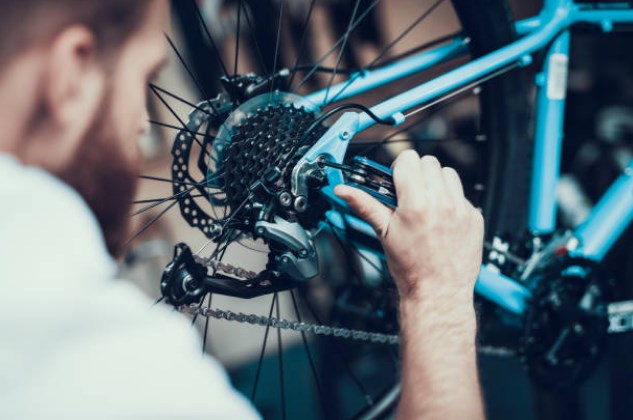
Step 2: Initial Saddle Height Estimation
A common method to estimate saddle height is the “heel method.” Sit on the saddle and place your heel on the pedal at its lowest position (6 o’clock). Your leg should be fully extended without your hips rocking side to side. This position ensures that when you pedal with the ball of your foot, your knee will have a slight bend at the bottom of the pedal stroke.
Step 3: Adjust the Saddle Height
- Loosen the seat post clamp using the appropriate tool.
- Raise or lower the saddle to the estimated height.
- Tighten the clamp securely to prevent movement during riding.
Step 4: Fine-Tune While Riding
Take a short ride and pay attention to how your knees feel. If you experience pain in the front of the knee, the saddle may be too low. Pain behind the knee or hip rocking indicates it might be too high. Adjust in small increments (5mm at a time) until you feel comfortable and efficient.
Step 5: Check Saddle Position Fore and Aft
Besides height, saddle fore and aft position affects your riding posture. A proper fit aligns your knee cap over the pedal axle when the pedals are horizontal. Use a plumb line or ask a friend to help with this assessment.
Common Mistakes in Bike Seat Adjustment
- Ignoring knee pain: Riding with knee discomfort is a sign your saddle height or position needs adjustment.
- Setting saddle too high for flexibility: If you cannot maintain proper pedaling form, lowering the saddle slightly may help.
- Not tightening the seat post: A loose saddle can cause instability and injury risk.
- Skipping fore-aft adjustment: Height alone is not enough for a proper bike fit.
- Relying purely on formulas: While formulas provide a good starting point, personal comfort and body mechanics are key.
Troubleshooting Your Saddle Height
| Problem | Possible Cause | Solution |
|---|---|---|
| Knee pain at the front | Saddle too low | Raise saddle height by 5mm and test again |
| Hip rocking side to side | Saddle too high | Lower saddle height slightly |
| Numbness in feet or hands | Improper bike ergonomics or saddle tilt | Adjust saddle tilt and check handlebar position |
| General discomfort after rides | Incorrect fore-aft saddle position | Move saddle forward or backward gradually |
Enhancing Your Bike Ergonomics with Proper Bike Seat Adjustment
Setting the correct saddle height is a crucial part of achieving the proper bike fit. However, to optimize your riding experience, consider other ergonomic factors such as handlebar height, reach, and pedal type. A well-fitted bike reduces fatigue, improves power output, and prevents long-term injuries.
If you’re interested in learning more about bike maintenance and advanced fitting techniques, consider exploring comprehensive resources like the DIY Bike Repair course. It offers detailed guidance on bike ergonomics, repairs, and upkeep, empowering you to maintain your bike like a pro.
Summary: Key Points to Remember
- Start with the heel method for initial saddle height estimation.
- Adjust saddle height in small increments and test by riding.
- Check and adjust fore-aft saddle position for knee alignment.
- Pay attention to pain signals and discomfort to fine-tune fit.
- Ensure your bike ergonomics support your posture and riding style.
With the right saddle height and bike adjustments, you’ll enjoy smoother rides, better performance, and fewer aches. Take the time to tune your bike seat properly—it’s a simple step that makes a big difference.
Learn More About DIY Bike Repair
Ready to master bike maintenance and adjustments? Get started with the ultimate bike repair course today and keep your rides smooth and safe!
Ready to Take the Next Step?
If DIY Bike Repair sounds like the right fit after reading this review, you can visit the official page and see all the details straight from the vendor.